

Someone pried open a locked window in Cyprus and took our laptops, our cash and my jewelry while Matt and I slept in the next room with the door closed.
I want to start there, on a page about safety products, because not one thing on this list would have stopped it.
Here’s the hard truth about what travel safety gear does and doesn’t do. It doesn’t make you perfectly safe. What the right few pieces do is take a set of small daily decisions off your plate, so you’re not thinking about your bag in a crowd or the lock on a door you didn’t install. That’s great, but it’s a completely different claim from the one most of this stuff is sold on. True travel safety has to be learned – more on that later in this article.
But the thing is, the internet will sell you an enormous amount of travel safety gear. Bras with zipper pockets. Cut-resistant backpacks. Personal alarms the size of a lipstick. Door wedge alarms. Neck wallets. Anti-theft everything.
I’ve tried a lot of it. Some of it is genuinely useful. But most of it sounds reassuring in a product description and then sits unused after the first trip.
Here’s how I tell them apart, and then here’s the actual list.
The test I use before I buy anything
The dividing line isn’t the category and it isn’t the price.
It’s whether I’d use the thing consistently, on an ordinary day, without anxiety prompting me.
That’s it. The pieces that have survived years of full-time travel are in the bag every time and I mostly forget they’re there. The ones that didn’t survive were the ones I had to remember to use, which meant I didn’t actually use them.
Some of the links below earn us a commission. It doesn’t change what’s on the list, and it hasn’t changed a word about what any of these things can’t do.
The four I carry every single trip
A personal safety alarm
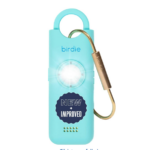
If you buy one thing off this page, buy this.
Not because I walk around expecting to need it. I’ve never used mine in an emergency, and I hope I never do. But I carry it every time I leave my accommodation anyway, in an outer pocket where I can actually reach it.
Here’s why. Just having it changes something. There’s a specific kind of calm that comes from knowing that if a situation ever escalated, walking back later than I meant to, somewhere that suddenly felt wrong, being followed, I could instantly draw attention to myself from anyone within a significant distance. That’s not a small thing. It shifts you from feeling potentially helpless to feeling like you have an option.
Mine is small, loud and simple. You pull a pin and it screams. No complicated instructions, no app, and a rechargeable battery.
And it has a flashlight, so if I’m walking in a dark place like a beach or a quiet street I use its flashlight instead of my phone’s. That way it’s literally in my hand when I’m feeling the most vulnerable.
She’s Birdie Personal Safety Alarm 3.0
What it won’t do: anything at all from the bottom of your bag. This is the one piece of gear on this list whose entire value depends on where you put it, and it’s the mistake I don’t want you to make. Outer pocket, same pocket every day, or clipped to a keyring you always have handy.
A quality anti-theft crossbody bag
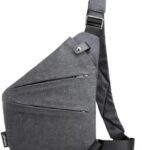
A crossbody is my most-used travel safety item by a mile, and honestly it’s less a safety product than just a smarter way to carry things.
A good crossbody that zips securely, sits close to your body and is genuinely hard to open without you noticing does more for day-to-day security than almost anything else I carry. Phone, cards, cash, passport, all of it stays physically attached to me and out of reach of anyone moving quickly past me in a crowd.
I wear mine in front of me in very busy markets and transit hubs. Everywhere else it sits naturally at my side, zipped, close to my body. What I don’t use is an open-top tote or anything with easy external pockets in a city known for pickpocketing. That isn’t paranoia. It’s just not making myself the easiest target in the room.
FlyHugz Anti-Theft Crossbody Sling Bag
What it won’t do: necessarily count as your personal item on a budget airline. If you’re planning to fly Ryanair, Wizz or easyJet, check the bag’s listed dimensions against that airline’s published allowance before you buy, and remember that a bag which fits when it’s packed sensibly can fail when it’s stuffed.
A portable door lock

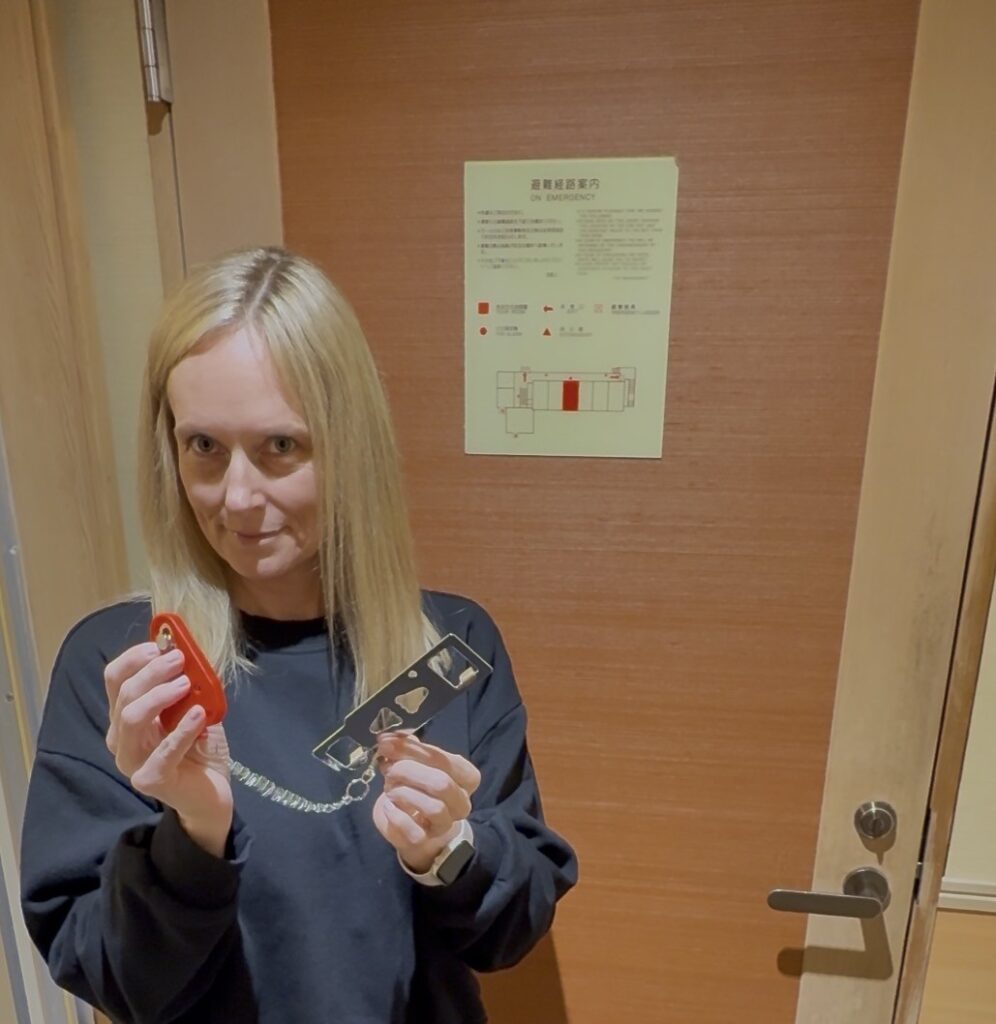
This one surprised me. I was skeptical before I tried it and now I travel with one almost everywhere, especially after Cyprus.
It’s a small device that braces a door from the inside, which means that even if somebody has a key or a card that works on your lock, they can’t open the door while it’s engaged. Ten seconds to install. For solo travelers, the peace of mind it buys is worth the tiny amount of space it takes.
What it won’t do: fit every door, and this is an important caveat.
The lock works by seating into the gap between the door and the frame near the strike plate, so it needs clean clearance right there. Older buildings and heavily trimmed European door frames often don’t give it any, and four-star hotels are no protection against this at all. It works beautifully across North America and it will let you down in a lovely old building in Italy.
So carry a door wedge as well. A wedge works on the door itself and doesn’t care about the frame or the trim, it costs almost nothing, and it weighs less than the lock does. The one on this list has a 120 decibel alarm built into it, so if the door does move it wakes you instead of just slowing someone down. I’d rather you took both and used whichever the room allows than took one and found out at bedtime.
The portable door lock is here, and the door wedge is here.
A backup credit card, stored separately
Not a gadget, not really a safety product, and the item that has saved me most concretely in a real emergency.
One extra card that isn’t in my wallet and isn’t connected to Apple Pay or Google Pay, tucked into a hidden pocket in my personal item. It stays there unless I need it.
Most travelers don’t do this, and most travelers whose wallet or phone is stolen or whose main card gets frozen end up genuinely stuck, unable to pay for a taxi or a room or dinner while they sort it out. That backup card costs nothing to carry and it turns a crisis into an inconvenience. If either one happens to you, my free guide What to Do if Your Passport, Wallet or Phone Goes Missing Abroad is the sequence to work through, and the card side of it is in my free guide When Your Credit Card Doesn’t Work Abroad.
What it won’t do: help you if it’s in the same bag as the first one. Separate bag, or it isn’t a backup.
The rest of the list, and the problem each one solves
Those four are in the bag whatever the trip is. The rest of what I recommend is here, with the specific problem each one is for, so you can take the ones that match the trip you’re actually taking and leave the rest.
A door and window alarm for the part of the room a lock can’t cover. Cyprus came in through a window we had closed and locked, and a portable door lock does nothing at all about a window. These are stick-on sensors that shriek when the thing they’re stuck to opens, and arming them is one button on the way to bed. What it won’t do: stop anybody. It wakes you, which in our case would have been the whole difference.
A second personal alarm if you carry more than one bag. The entire value of the first one is that it’s always in the same pocket, and that falls apart the day you swap bags. One on your keys and one on the daypack means you never have to remember which bag it’s in. This one recharges and it’s waterproof. What it won’t do: make up for the first one being buried. Two alarms at the bottom of two bags is worse than one alarm in an outer pocket.
Zipper clips for a city with a pickpocket reputation. They lock two zipper pulls together, so opening your bag takes two hands and a few seconds instead of one quiet tug, and a few seconds is usually enough to make someone choose an easier target. Four in a pack covers a backpack and a crossbody. What they won’t do: help with a bag you’ve left open at the top, which is how most of it actually happens.
A neck wallet, and I’ll say plainly that this one fails my own test. I wouldn’t wear one consistently, and a product I’d skip on a hot day isn’t protecting me. But plenty of people would wear one, and if you’re one of them the answer is different, because the test is about you rather than about the product. It’s also genuinely good on a travel day for keeping a passport, a boarding pass and one card together and at hand. What it won’t do: anything from inside your bag. It only works worn.
Small luggage locks for long train rides, where your bag ends up in an overhead rack several rows from where you’re sitting or on a rack at the far end of the car. They won’t defeat a knife and they aren’t meant to. They defeat the person deciding which bag is easiest, which is the decision that actually gets made. These are TSA approved, so a checked bag gets opened with a key rather than cut open. Nothing irreplaceable goes up there regardless.
Luggage tags that don’t publish your address on the outside of your bag. A QR tag lets whoever finds it message you without a whole baggage hall reading your name and where you live. Two in a pack covers a checked bag and a carry-on. What they won’t do: tell you where the bag is. That’s the next one.
Bluetooth trackers that work with Apple’s Find My network, so when an airline tells you your bag is on its way you can check whether that’s true. One in each checked bag and one in the daypack. The batteries are replaceable, so a flat one doesn’t mean a new tag. What they won’t do: get the bag back. They tell you where it is, and knowing that changes how the conversation at the desk goes.
If you’re buying one thing
It’s cheap, it weighs nothing, it needs no setup, and it’s the only item here that changes how you feel walking somewhere at night. Everything else on this page makes a specific problem less likely. That one makes you feel like you have an option, every day, whether or not anything ever happens.
If you’re buying two, add the crossbody, because you’ll use it every single day of every trip for the rest of your traveling life.
What I don’t buy
What I’ve stopped buying is anything that fails the test. If I have to remember to use it, if it’s uncomfortable enough that I’d skip it on a hot day, if it only comes out when I’m already nervous, it isn’t going to help me.
That’s most of the cut-resistant, slash-proof, hidden-compartment end of the market, in my experience. It’s built for the version of a trip you’re imagining rather than the one you’ll have.
After nearly a decade of full-time travel to nearly 100 countries, here’s the best advice I can give you: products aren’t a substitute for awareness, preparation and good instincts.
They’re what you add once the rest is in place. Buy all eleven tomorrow and change nothing else about how you plan a trip and you’ll have a bag full of good products doing a fraction of what they could. The reason I can carry so little is that the rest of it was handled weeks earlier, which is what makes the small stuff in my bag enough.
The part a shopping list can’t do for you
Everything above goes in a bag. The part that actually keeps you out of trouble doesn’t.
I can hand you eleven products in five minutes. What took me years was the other thing: knowing which neighborhood to book in before I’d ever been there, how to get out of an airport in a country where the taxis aren’t safe to hail, what to set up on my phone at home so a stolen one is an annoyance instead of an emergency, and what order to do things in when something does go wrong, which is the difference between a bad morning and a ruined trip.
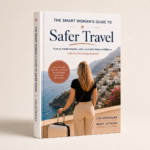
That’s why I wrote The Smart Woman’s Guide to Safer Travel. It’s everything I actually do, walked through every phase of a trip, with eight grab-and-go checklists and a fill-in emergency contact card so it comes with you instead of sitting on a shelf. It’s $19.99 USD and it’s an instant download.
This page is the five percent you can buy. That’s the rest of it, and it’s the reason almost every trip I take is completely uneventful.
The bottom line
Four things live in my bag permanently: an alarm, a crossbody that zips, a door lock and a spare card in a separate pocket. The rest of the list comes along when a trip calls for it. That’s the whole list after nearly a decade of full-time travel, and it fits in a corner of a carry-on.
Every one of them has a limit and I’ve told you what it is, because a recommendation without its limit is how you end up standing in an Italian hotel corridor at eleven at night holding a door lock that won’t fit.
Buy the alarm. Put it in the outer pocket. Then go and do the unglamorous part, which is all the deciding you do weeks before you leave, and which is worth more than everything on this page put together.
Frequently asked questions
Does the portable door lock work everywhere? No, and don’t let anyone tell you otherwise. It needs a clean gap between the door and the frame near the strike plate, and older or ornately trimmed European door frames often don’t have one. Four stars is no guarantee. Carry a door wedge as well and use whichever the room allows.
Does the door lock cause a problem at airport security? No. I’ve traveled with it all over the world and never had an issue. Occasionally a security person will pull it out and ask about it, but it seems more out of curiosity than anything else.
What about a connecting or adjoining door with no latch? If the connecting door is a double door you can affix the portable door lock to the one on your side. If not, the wedge is the answer, so carry both.
Is an anti-theft crossbody really a personal item on a budget airline? It’s your purse, so yes. Check the listed dimensions against the airline’s own published allowance before you buy, especially for Ryanair, Wizz and easyJet, and don’t overstuff it. I always save room in my personal item to tuck my crossbody bag in during boarding, then take it back out the second I’m on the jet bridge.
Do I need all of them? No. Start with the alarm and the crossbody. Add the door lock if you’re staying in vacation rentals or traveling alone. The backup card costs nothing and takes thirty seconds. Everything after that is for a specific kind of trip.
Do your Amazon links work if I’m not in the US? Yes. Amazon redirects readers in nine other countries to their own store automatically, and you’ll get the same item or the closest match. Australia isn’t on that list yet, which is a real gap and one I can’t fix from here.
Is a money belt or a neck wallet worth it? Not for me, because I wouldn’t wear one consistently and a product I skip on a hot day isn’t protecting me. If you’d genuinely use a neck wallet, and I know plenty of people who do, that’s a different answer, and it’s the test rather than the product that matters. It’s also wonderful on a travel day for keeping your tickets and documents organized and at hand.
What about a personal alarm that’s also an app, or a tracker? Mine recharges, which I’d rather do than hunt for the right battery, and that’s as connected as I want it to be. It doesn’t pair with anything and it doesn’t need my phone to work. Anything that has to find a signal is a thing that can be offline in the moment you want it, and the whole point of a pin you pull is that it works with no thought at all.
Where’s the rest of the gear? Everything Matt and I use, safety and otherwise, is in our Amazon storefront. It’s worth bookmarking rather than hunting for a link in an old email.
Subscribe to my newsletter!
I send one email a week. Real stories, what worked, what didn’t, and the practical things I only figure out by doing them. Plus my free packing guide and international travel checklist when you sign up.


2 comments