
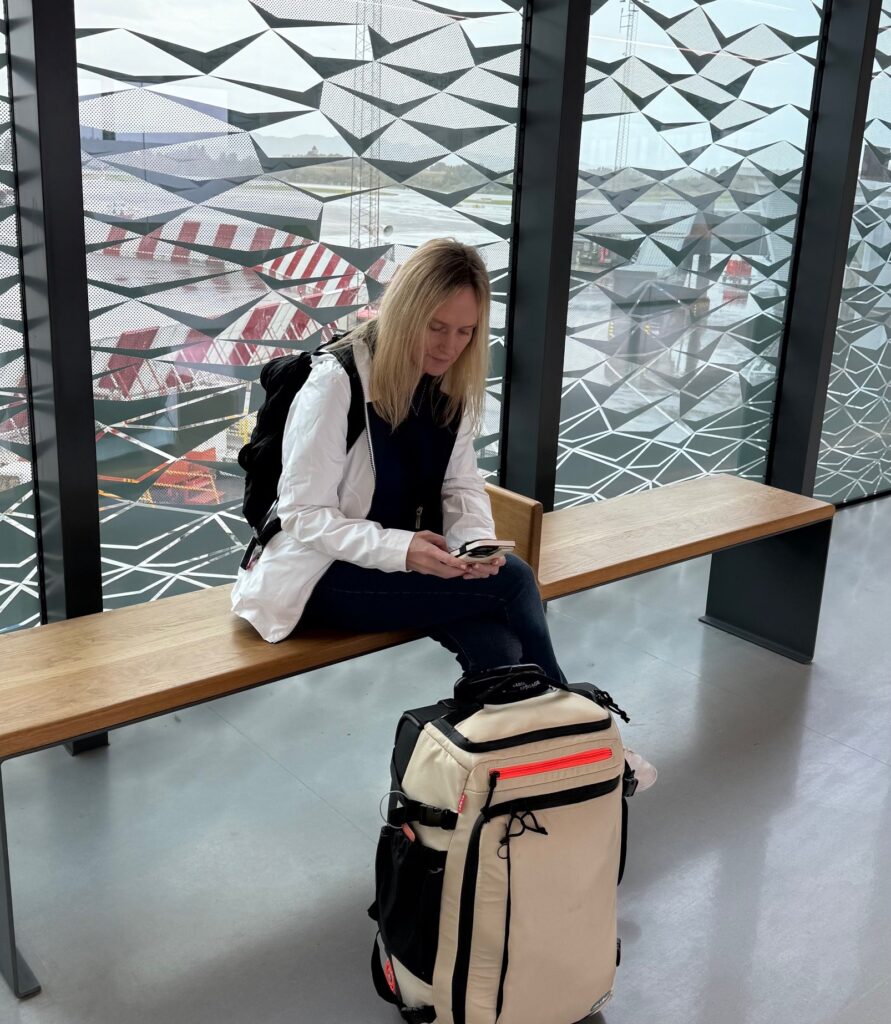

I lost my phone in Valencia and had a working replacement by late afternoon.
I’m starting there because the thing worth knowing about this is that it’s a bad morning, not a ruined trip. What separates those two isn’t luck. It’s knowing what order to do things in.
So here’s the order.
What happened in Valencia
We’d been out to dinner with friends and then out for drinks afterward, the good kind of late night. I woke up the next morning, reached for my phone, and it wasn’t there. It wasn’t anywhere in the apartment.
I still don’t know whether I lost it or somebody took it. That’s the part that embarrassed me, because I know better. Late night, distracted, busy city.
I lay there for about thirty seconds feeling exactly what you’d expect. Then I got up and got to work.
Laptop open, icloud.com/find, Lost Mode, inside a minute. Then I checked my accounts, and sure enough the cards I keep in my phone case had already been used. I called every issuer over VoIP from the laptop and canceled all of them. Then I pulled the backup card out of my personal item bag and headed to the Apple Store, where they wiped the old phone, sold me a new one, and worked with T-Mobile to load a new eSIM on the spot.
A couple of hours later the new phone had every app, every saved password and every photo the old one had.
By dinner I was back to having a good trip.
I gave myself a fair amount of eye-rolling for being careless in the first place and I’d earned it. But the thing that turned a catastrophe into an errand wasn’t staying calm. It was that I’d set a few things up months earlier, and then did the steps in the right order.
Before any of the steps, one rule
Slow down and focus on the next thing. Not the whole problem, just the next thing.
Rushing makes a problem feel bigger than it is, and it does that at exactly the moment you need to be making good decisions. You don’t have to solve all of this standing on a street corner. Get somewhere calm first, a hotel lobby, a cafe, anywhere with a chair and wifi, and then work the list.
What do I need right now? Who can help me? What’s the first thing?
That’s the whole mindset piece. The rest is just sequence.
If your phone or your wallet is gone
The order matters. Do them in this sequence.
1. Lock the phone, before anything else
On an iPhone, go to icloud.com/find from any browser and choose Lost Mode. On Android it’s google.com/android/find. Either takes about a minute on a borrowed laptop.
This one is first because it’s the step that closes off the money. Lost Mode locks the screen, disables Apple Pay and puts a message on the display. Until you’ve done it, everything on that phone is sitting open for whoever has it.
2. Cancel the cards
Fraud moves in minutes. Mine had already been used by the time I looked.
Use a laptop, use a friend’s phone, use the computer at the hotel desk. Call your issuers or freeze the cards through their apps. Most banks have a number that works from abroad, and it’s worth having it saved somewhere that isn’t your phone.
Cancel everything linked to your phone wallet, not only the physical card that went missing. That’s a thing people miss, and it’s covered in more detail in my free guide When Your Credit Card Doesn’t Work Abroad.
3. Call your carrier and kill the line
This is the step almost everyone skips, and it’s the one I’d most want you to remember.
Locking the phone secures the screen. It does not switch off the SIM. Text messages are still arriving on a device you no longer have, and if your bank sends two-factor codes by text, those codes are going to whoever is holding it.
Deactivating the line closes that door completely.
4. File a police report
Do this if there’s any chance you’ll claim on travel insurance, or if what you lost is worth documenting. Find the nearest station, file it, get a copy.
Nothing may ever come of the investigation, but that isn’t why you’re there. The paper trail is why you’re there. My free guide Does Travel Insurance Actually Cover That? goes through what a claim really needs from you.
5. Wipe the phone once you have a replacement
Not before. Once the new device is in your hand, trigger the full remote wipe. If automatic backup was switched on, everything restores onto the new phone, which is exactly what happened to me.
If it’s your passport
Different sequence, and the first step surprises almost everyone.
Call the embassy or consulate first. Not the police.
I know that feels backward. Something was stolen, so surely you report it.
But the embassy is the one that decides what it needs from you, and whether a police report is part of that depends on where you are and on whether the passport was lost or taken. Going to the police first, before you know, can cost you a full day for nothing.
So the order is: get somewhere calm, then call the embassy. They deal with this every single day.
Then file the police report if the embassy tells you to, or if it was definitely stolen. Then head to the embassy with whatever they told you to bring, which is usually ID, a passport photo, and that report if it’s needed. An emergency travel document or temporary passport typically comes through in one to two days.
I’ve never lost a passport abroad. But I’ve helped friends through it more than once, and the thing that surprises them every time is how ordinary the process turns out to be once they’ve made that first call.
Save your embassy’s contact details before you travel, somewhere you can reach without data. It takes thirty seconds at home and it’s the difference between making that call and hunting for a phone number in a country where you can’t get online.
The five minutes at home that did all the work
Here’s what actually saved my trip in Valencia, and none of it happened in Valencia.
A backup credit card, in a completely different bag from my wallet, not linked to Apple Pay. Automatic cloud backup already switched on, because you can’t back up a phone you no longer have. Screenshots of the things I’d need with no data: the address, the confirmations, the flight details. And knowing where icloud.com/find was before I needed to find it.
Not one of those took more than a few minutes, and all of them happened at home on the sofa, months before they mattered.
That’s the whole argument of my free guide The Travel Safety Habits That Matter, and this is the clearest example of it I have. The work happens before you go. The trip is where it pays you back.
Where the rest of it lives
This article covers two of the six stressful situations that chapter seven of my book walks through.
The others are what to do if you’ve been scammed, what to do if you’re robbed, how to find a doctor who speaks your language in a country where you don’t, and a section on assault that’s in there because if you’re ever in that situation you deserve to know what to do rather than work it out alone.
The bottom line
None of this is difficult. It’s just specific, and specific is exactly the kind of thing you don’t want to be working out on the spot.
Phone or wallet: lock the phone, cancel the cards, kill the line, file the report, wipe it once you’ve replaced it.
Passport: embassy first, always.
And then the five minutes at home, because that’s the part that decides whether any of the rest of it works.
You can handle this. It’s an errand with a checklist, and now you have the checklist.
Frequently asked questions
What’s the single first thing to do if my phone is stolen?
Lock it remotely. iPhone, icloud.com/find and choose Lost Mode. Android, google.com/android/find. Before you call anyone, before you look for it, before you tell the hotel. It takes a minute from any borrowed laptop and it’s what stops the money moving.
Do I actually need a police report?
For a phone or a wallet, you need one if you’re going to claim on travel insurance, and it’s worth having anyway. For a passport, you may not, and that’s why the embassy call comes first. They’ll tell you whether it’s required where you are.
How long does an emergency passport take?
Usually one to two days once you’ve given the embassy what it asked for. The slow part is almost never the embassy, it’s the time people lose doing things in the wrong order beforehand.
What if I don’t speak the language?
Your embassy or consulate is the answer to that. Helping citizens through exactly this is what they do, and they’ll connect you with people who speak your language. The US State Department also keeps searchable lists by city at travel.state.gov.
Should I go and get my phone back if I can see where it is?
No. Not ever, not even if the map is showing you a street you recognize. A phone is replaceable and you are not. Report it, let it go, and let the tracking be information for the police rather than a plan for your afternoon.
Does travel insurance cover a stolen phone?
Sometimes, up to a per-item limit that’s usually lower than people expect, and almost always only with a police report. Check your own policy for the electronics limit specifically, because that’s where these claims come unstuck. My free guide Does Travel Insurance Actually Cover That? goes through it properly.



2 comments