

Some links on this page are affiliate links. We may earn a commission if you use them. See our Affiliate Disclosure.
I don’t have one favorite carry-on bag. I have two, and which one comes with me depends on the trip.
I’ve lived out of a carry-on for nearly a decade across more than ninety-five countries, and I still switch between two bags.
So here’s both of them, the pros and the cons, and then the things you should look at when you’re shopping for a new carry-on.
The two bags
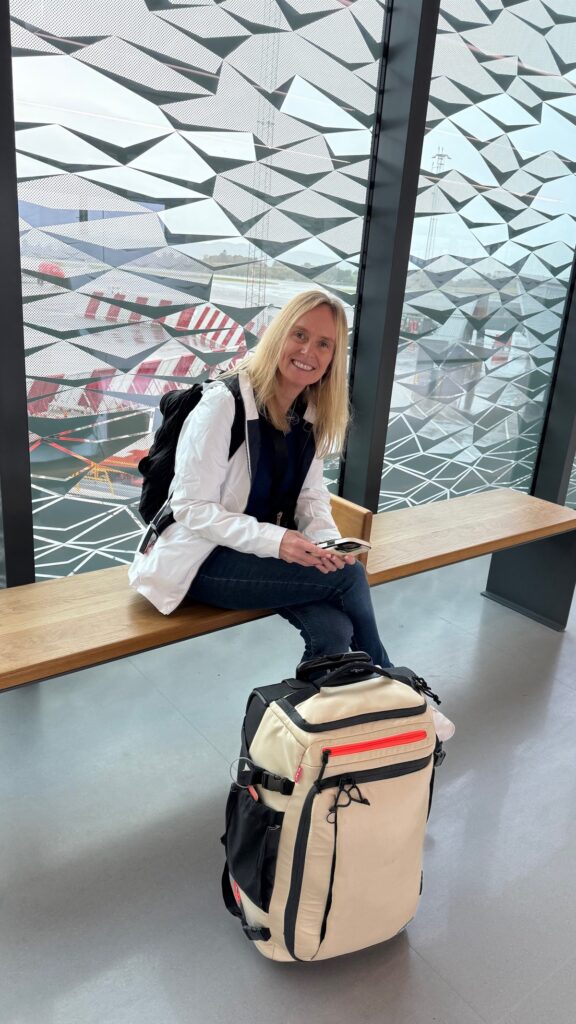
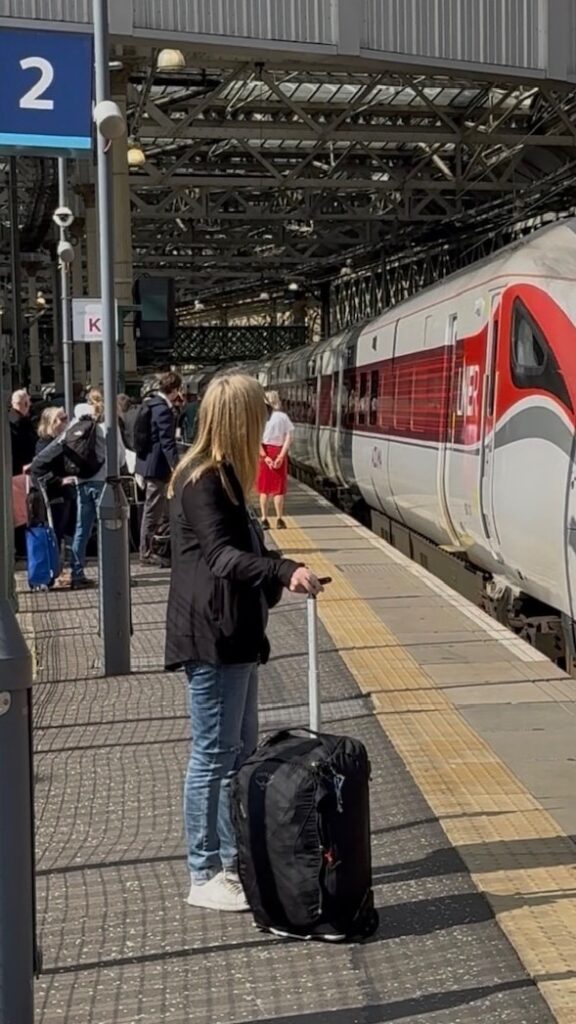
One is a Bagsmart Blast Pro 43L roller backpack. The other is my Osprey Sojourn Shuttle.
Weight isn’t the difference. The Bagsmart is 6.61 pounds empty and the Osprey is 6.4, which is close enough that it shouldn’t decide anything for you.
The Bagsmart is by far the cuter bag, and that’s why I love it.
Expanded, it also holds more than the Osprey does. That sounds like a straight win but it isn’t always. All that extra room is an invitation to overpack, and the person hoisting the heavier bag into an overhead bin is me.
Another annoying thing about overpacking is that once it’s crammed full the Bagsmart tends to fall forward, and nothing can go on top of it. The Osprey doesn’t have that problem. It stands whatever I’ve done to it, my backpack sits on top of it while I’m digging for a passport, and honestly that one thing is why I haven’t retired it. Matt thinks my Bagsmart falling over while I’m buying a bottle of water is the funniest event in travel and has never once let it pass without comment.
The Bagsmart opens like a clamshell. That’s wonderful in a hotel room and it’s the wrong design in an airport when you need one thing out of the bag in a hurry and you’re standing in a walkway.
On water resistance they’re both fine.
So some trips I want the cute one that holds more, and some trips I want the sturdy one that stays upright. That’s the whole comparison. There isn’t a winner.
One buying note, because people ask: the Bagsmart isn’t sold on Amazon, which is why it has never appeared on my luggage list. I buy it directly from Bagsmart, and the code READY should take something off the price.
My best advice is soft-sided and two wheels
I am an ardent advocate for two-wheeled, soft-sided carry-ons, and the whole reason is that they squish. Cinch the compression straps and a soft bag physically gets smaller. A hard shell is whatever size it is, forever, and there is nothing you can do about that.
When I fly a strict airline like AirAsia or Wizz Air I pack a little lighter and then use the straps to squeeze the bag down. That doesn’t work on a hard case.
Four spinner wheels are lovely on an airport floor and I carried one when I had a corporate job and traveled for work. But they are a liability everywhere else. Two big recessed wheels take cobblestones, curbs and train platforms better than four little wheels, and they don’t snap off.
Empty weight is the number almost nobody checks
When an airline gives you a weight limit, the bag counts. Wheels, a handle and a frame all weigh something before you’ve put a single dress in. On a generous allowance that doesn’t matter. On a tight one it’s a portion of your budget.
The tightest I see regularly is around seventeen pounds for the carry-on and the personal item together, and at that number you’re spending a real slice of it on hardware. If limits like that are going to be normal for you, a frameless bag with no wheels will genuinely serve you better than mine will. But the tradeoff is brutal: you have to carry it.
On a strict airline, three things help no matter what bag you’re carrying. Wear the heavy items, because anything on your body is free and nobody weighs a coat. Fill that coat’s pockets on the walk to the check-in counter or gate with your chargers, your cables and your book, which may sound silly but works every time. And shoes are usually the heaviest thing in a carry-on, so take no more than three shoes and put the heavier pair on your feet. Feel free to use my free Travel Shoe Finder to see what three shoes work for your specific trip.
Measure the bag, don’t trust the label
Twenty-two by fourteen by nine inches is the standard US carry-on allowance, and it’s a real constraint rather than a suggestion.
Plenty of bags sold as “22 inch” are twenty-two inches tall and then over on the width or the depth. Most people find that out at the gate.
Compression straps fix a lot of this, and both my Bagsmart and my Osprey have them. On a strict airline I pull them tight and the bag comes in on the width and the depth, which is what gets measured. On an airline that doesn’t care, I let them out and the bag holds more. Same bag, two sizes.
Some bags that measure perfectly legal still look big, and a bag that looks big is more likely to catch a gate agent’s eye. If you’re choosing between two that both fit the numbers, I’d take the one that looks smaller.
So what should you buy?
If you want the short version: get a soft-sided, two-wheeled carry-on around twenty-two inches, check the width and depth yourself rather than trusting the title, weigh it empty before you buy, and make sure it has real compression straps.
Then read the reviews.
Then choose. The bag matters much less than what goes in it. For years I packed shoes for every situation I could imagine and then wore the same two pairs from the first day to the last. No suitcase ever made would have fixed that.
What goes inside is the part that actually decides whether the trip is pleasant, and that’s all in my free guide, Lisa’s Carry-On Only System.
Frequently asked questions
What size carry-on should I get? Twenty-two by fourteen by nine inches or under, and measure it yourself. Compression straps can help you comply on strict airlines.
Hard shell or soft? Soft, and I’m firm on this. Soft-sided bags are lighter empty and compress when you need them to. A hard shell can’t, and the moment you need it to is the moment it costs you money.
Two wheels or four? Two. Four wheels are better on smooth floors and worse on everything else, and they’re the part most likely to break.
Do I need the backpack straps? Only if you’ll use them. A convertible bag gives you the option of getting the thing onto your back for stairs and gravel, so if you’d never actually do that the straps are weight you’re carrying for nothing. Be honest with yourself about which one you are.
How much should I spend? Osprey isn’t the cheapest and I’d still buy it again. I’m on the same bag I started traveling with years ago, and a carry-on that lasts that long costs less than two cheap ones would have.
Is my old suitcase really that bad? Probably not. If it fits, it rolls, and it isn’t heavy empty, keep using it. The best bag is frequently the one you already own.