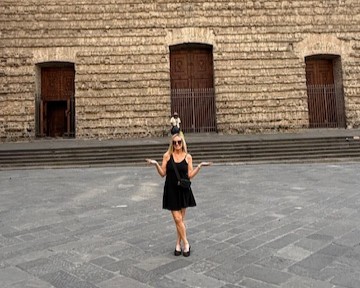

I was twenty, in Florence, and I’d never really traveled.
A group of kids surrounded me with newspapers held up, and by the time I understood what was happening they had my wallet. They went for my passport next and didn’t get it.
Two things stopped them. One was the driver of a horse and buggy who saw what was going on and kicked at them until they scattered. The other was that my passport was zipped into an inner pocket of my purse, too deep for a fast hand, because even at twenty with no idea what I was doing it had occurred to me that it should be.
I’ve thought about those two reasons for a long time. I arranged one of them. The other one showed up on its own.
After nearly a decade of full-time travel across close to 100 countries, the most important safety advice I can give you is that taking the time to be prepared is 90% of the battle.
Preparation is not the same as being on guard
Being on guard is something you do while you’re there. It’s tiring, it can take the fun out of everything, and it doesn’t work nearly as well as people think it does.
Preparation is a set of decisions you make before you go. At your kitchen table, with time and good wifi and nobody watching you. That’s the part that does the heavy lifting, and it’s the part that actually keeps you safe.
Think about how you booked your last trip. Photos, reviews, price, the pin on the map. That’s how I booked for years. It isn’t wrong, it’s just that not one of those four things tells you what the street outside is like at eleven at night, or whether you’ll be walking a block from the taxi to the door with your bags, or what kind of window that ground floor bedroom has.
You can find all of it out. It’s free, it takes about ten minutes, and nobody ever teaches it.
And once you’ve done it, the trip feels different in a way that’s hard to describe until it happens. You’re not standing outside a building at midnight still deciding whether this was a good idea. You decided at home, when deciding was easy.
You already know how to do this
Women are not bad at safety. We’ve been reading rooms and streets and parking lots our whole lives without ever calling it a skill.
What changes when you land somewhere new isn’t the skill. It’s that the skill has nothing to work with yet. At home you know which street is busy at midnight and which one empties out. Somewhere else you don’t, and you can’t, and that has nothing at all to do with how capable you are.
So the gap is information. Not nerve. Which is genuinely good news, because information is the easiest thing in the world to go and get.
The one I didn’t listen to
The other half of this is your gut, and here’s the time I got it wrong.
We’d booked an apartment in Penang. The host asked us to meet him a block away rather than at the building, which on its own means very little. Our previous place in Penang had been the same, a building where homestays weren’t encouraged, and that host met us at the hotel next door. It turned into ten perfectly good nights and we ended up friendly with the guards.
Then he drove us in under a sign that read NO HOMESTAY. Then he handed us green cards that said Visitor and told us to say we were his guests if anyone asked.
By then I knew.
We moved in anyway.
That afternoon we went down to the pool and found it padlocked, with a sign sending us to the guard station for the key. The guard wouldn’t hand it over. He walked us to the building manager, who started shouting from the first word. He’d suspected for a long time that the apartment was being rented out. We would not be getting the pool key. He also said, plainly, that he couldn’t throw us out. He just wanted us to understand we weren’t wanted.
The host turned up about forty-five minutes later, pale and apologizing. We could stay, he said. Just not use the pool. We left the next morning and he refunded everything, including the night we’d slept there. It was my birthday.
Nothing dangerous happened, and that isn’t the point. The point is that I had all the information I needed before we carried the bags in, and I went ahead anyway, because stopping would have been awkward and expensive and I’d have had to explain myself to a man standing right there.
That’s the actual skill, and it isn’t having better instincts. Yours are already fine. It’s letting yourself act on one before you’ve built a case that would hold up in front of a jury.
The part I can’t dress up
Preparation isn’t a guarantee and I’m not going to sell it to you as one.
On our last night in Cyprus we packed early, locked up, set our alarms and slept well. The apartment was on the ground floor. In the morning Matt got up to make tea and came back into the bedroom looking pale. Someone had pried open a locked window while we slept in the next room with the door shut, and taken both our laptops, sunglasses, cash, my earrings, my wallet and my scarf.
We were lucky in the ways that mattered most. Passports untouched, neither of us hurt.
There’s no version of that sentence where I get to call it preparation. It was luck.
When we looked outside afterward we found a rock near the window with an arrow marked on it. A signal. Someone had been watching the apartment and choosing their moment, and knowing we’d been watched was worse than anything that was taken.
Here’s the part that wasn’t luck. Every afternoon that week we’d been sitting outside with our laptops and phones spread across the table, in full view of the street, effectively advertising what was inside. We weren’t being careless on purpose. We were relaxed and happy on a beautiful trip. But relaxed had tipped over into not noticing, and that’s part of what made us easy targets.
I still stay in vacation rentals all over the world and I still love them. What changed is what I check before I book one, and what I leave sitting out once I’m in it.
About all the gear
There’s an enormous amount of travel safety gear for sale and some of it is genuinely good.
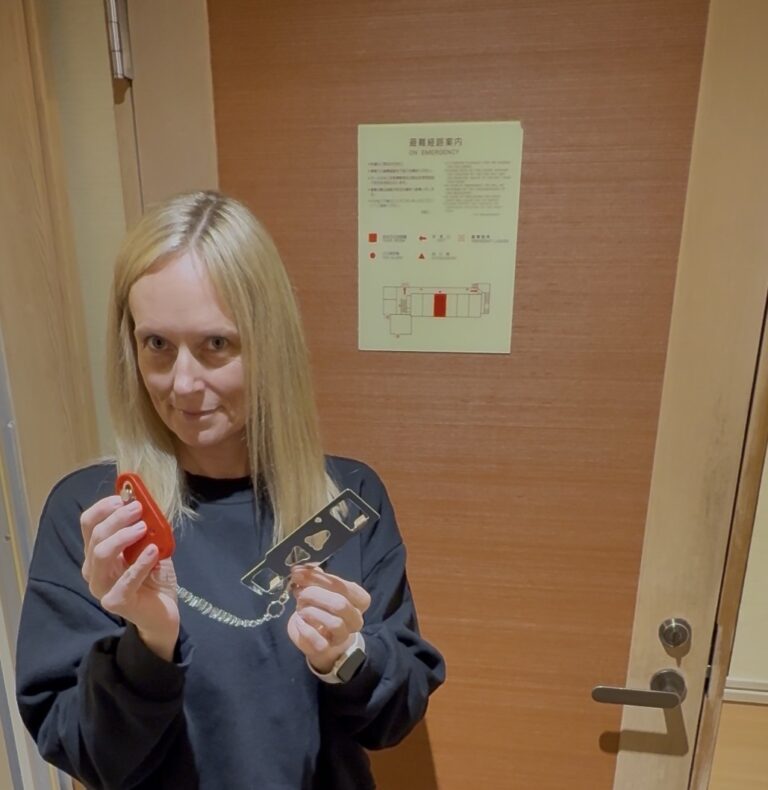
I carry five things. I’d put them last rather than first, though, and not because they don’t matter. It’s that buying the gear first feels like you’ve handled the problem when you haven’t started on it. Products sit on top of preparation and instincts. They don’t stand in for either one.
I’ve written up all five separately, what each one actually does and what it won’t do, in my free guide Travel Safety Gear: What’s Worth Buying and What Isn’t.
Where the specifics live
Everything above is the argument. The specifics are a book.
The Smart Woman’s Guide to Safer Travel is full of actionable advice on how to travel safely, all of the things I actually do after close to 100 countries. How to check a neighborhood before you book instead of after you arrive. What to look for in a listing that the photos will never show you. How to handle airports and taxis in places where the rules aren’t the ones you grew up with. What to do, in what order, when something does go wrong. It comes with eight checklists you can print and an emergency contact card to fill in and keep in your wallet.
It’s $19.99 and it’s an instant download.
The bottom line
Preparation and instincts. That’s the whole thing.
Preparation handles what you can see coming, and you do it at home before anything starts. Your instincts handle what you can’t, and the work there isn’t sharpening them. It’s acting on one a beat sooner than feels polite.
Florence is the first of those working. Penang is the second of them failing. Cyprus is the reminder that you can do both and still have a bad morning, and that a bad morning stays survivable when the things you can’t replace are somewhere a fast hand can’t reach.
None of it asks you to be braver than you already are.
Frequently asked questions
If I only did one thing, what should it be?
Spend ten minutes on the neighborhood before you book, not the property. Walk the surrounding streets on Street View, look at what’s open, and ask yourself honestly whether you’d want to come back to that door after dinner. A great apartment on a street you don’t want to walk down is not a great apartment.
Is solo travel safe for women?
That’s the wrong shape of question, and any answer that’s just yes or just no is selling you something. It depends enormously on where, when, how you’ve prepared and what you’re comfortable with, and those are all things you get to find out in advance rather than guess at. What I’ll say is that plenty of women do it well, and the ones who do have almost always done the preparation rather than found the courage.
I haven’t traveled much. How do I get confident?
By going. Confidence isn’t a thing you acquire and then travel with, it’s a thing that accumulates because you traveled. The first time you work out an unfamiliar airport, something shifts. The first time you figure out a train system in a language you don’t read, something shifts again. Start at whatever size feels manageable to you and let it build from there. Waiting until you feel completely ready is the only real mistake, because that feeling arrives afterward.
Do I need all the safety gear people sell?
No. Five things earn their place in my bag and everything else I’ve tried has come home unused. The full list, and what each one can’t do, is in my free guide Travel Safety Gear: What’s Worth Buying and What Isn’t.
What if something goes wrong anyway?
Then you work the sequence, and the reason to know the sequence is that you won’t be inventing it while your hands are shaking. Lock the phone, cancel the cards, then the report. Something going wrong is not the same as a trip being ruined, and the difference between those two things is almost always whether you’d set anything up in advance. My book covers this subject in detail.
Doesn’t all this preparation take the spontaneity out of it?
It does the opposite, and this surprised me too. The preparation is what buys the spontaneity. When the boring decisions are already made you can say yes to the dinner, the detour, the thing that wasn’t on the plan, because you’re not carrying the boring decisions around with you all day.