
Every foreign cash machine eventually asks you the same question. Do you want to be charged in the local currency and pay a small fee, or in your own dollars with no fee at all?
Take the fee. Every time.
I know how that sounds. One option says you pay something and the other says you pay nothing, and nobody standing at a cash machine at the end of a long day looks at the free one and thinks it’s the trap.
So here’s what the free one cost us.
What it cost us in Split
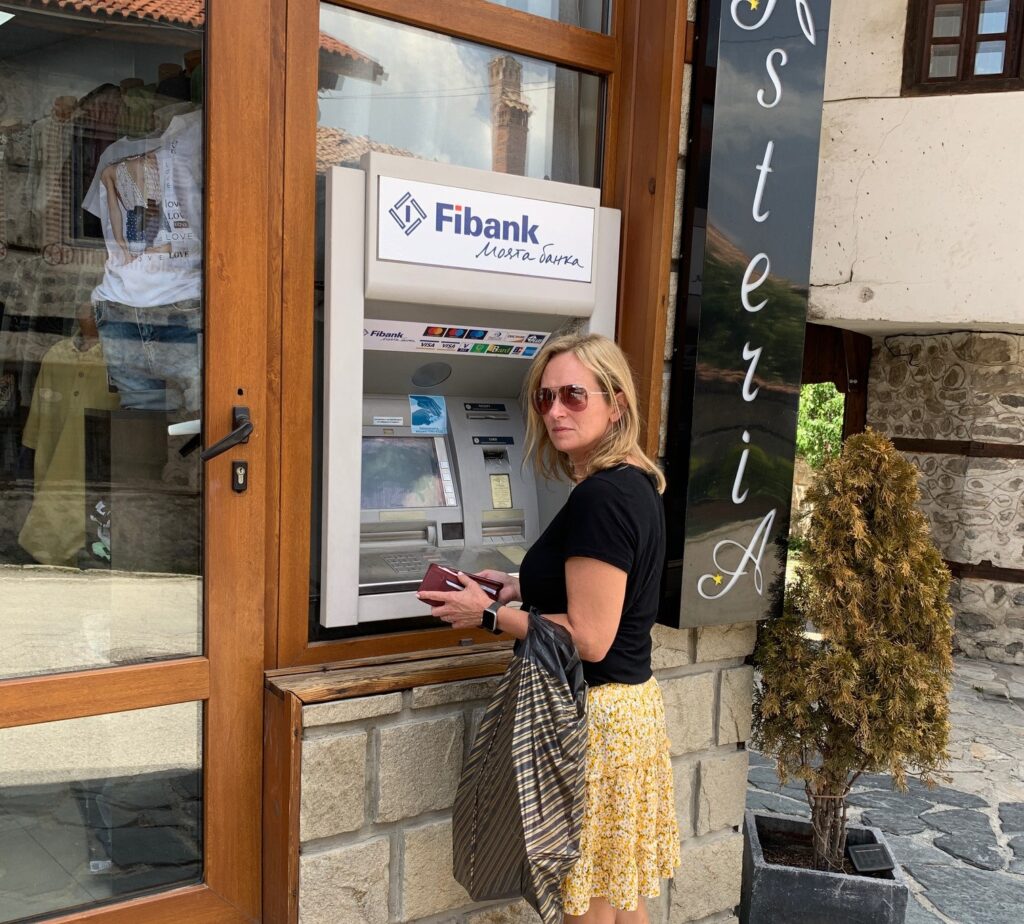
We took 2,000 Croatian Kuna out of a machine after a walking tour in Split, and we took the no-fee option, the way most people would.
That withdrawal charged our account $340.15.
Declining the conversion and paying the machine’s fee, 25 Kuna, about $3.90, would have come to $317.46.
The free withdrawal cost us $22.69 more than the one with a fee printed on it.
Nobody would agree to a $22.69 charge to take out $317 of their own money. We’d have laughed and walked to the next machine. Call it free and we said yes without blinking.
What the machine is actually doing
That offer has a name. It’s called dynamic currency conversion, and once you know it you’ll start seeing it everywhere, because it’s everywhere.
When you pay abroad, somebody has to turn the local price into your home currency. Normally that’s your own card’s network, and its rate sits a whisker off the real one.
Dynamic currency conversion takes that job away from your card and gives it to the machine standing in front of you, or the card reader, or the terminal the waiter is holding. Whoever does the converting gets to pick the rate, and they pick it in their own favor. That markup is the whole reason the option is on the screen. Nobody built it to be nice to you.
Nothing gets added to your bill. There’s no fee, exactly as promised. You accept a worse rate instead, and the difference goes to them without ever appearing as a charge you could point at.
Here are the two rates from that machine in Split. It offered us 5.8798 Kuna per dollar. The real rate that day was 6.4115. That’s 8 to 9 percent off the true number.
Which means the bad rate cost us $26.59, and the fee we were so pleased to have dodged was $3.90. The fee was the cheap part. It was always going to be the cheap part.
The word free is describing the fee, not the price
This is the bit worth carrying around. On that screen, “no fee” isn’t a discount. It’s an accurate description of one line of the transaction and a complete silence about the other one.
The fee is the honest, printed, checkable number. The rate is the one nobody shows you and nobody sends you a receipt for. When a screen goes out of its way to tell you which of those two you’re avoiding, it’s telling you where it makes its money.
It’s not only cash machines
The same offer turns up on card readers. You’re paying for dinner in Lisbon, the waiter turns the terminal around, and it asks whether you’d like to be charged in euros or in dollars.
Same trick, smaller numbers, more often. You pick the local currency there too.
Euros in Portugal. Pounds in London. Yen in Japan. Whatever is printed on the notes in your pocket is the currency you pay in. There’s no situation where the other answer is better for you, and you never have to think about it again once you’ve decided that.
What declining the conversion doesn’t fix
I want to be straight about the size of this. Getting the currency right is one decision, and it’s the one I’d put in front of everyone. It isn’t the only place the money goes.
Your own bank may charge you for using a foreign machine, and the machine’s owner may charge you too. Those are separate from the rate, and declining the conversion doesn’t touch either of them. Your credit card may be taking a cut of every purchase you make abroad, which is a third charge again, and most people never look at it. Which machine you walk up to changes what you pay. How many times you go changes what you pay. So does what you do with the leftover notes on the last day.
And that’s only the cash. It says nothing about what happened when you booked the flight, or the room, or how you got out of the airport, or the tours you booked once you were there.
None of it is difficult. It’s just a lot of small things that nobody tells you, and they’re the reason a trip costs more than the sum of what you thought you agreed to.
Frequently asked questions
Is there ever a time I should accept the conversion? No. We’ve been offered it on six continents and I’ve never once found a version of it that was the better deal. If you want a rule you never have to think about again, this is the one: local currency, every time, cash machine or card reader.
The screen says no fee. How is that not cheaper? Because the fee isn’t where they’re making the money. The rate is. In Split the bad rate cost us $26.59 and the fee was $3.90. Paying the fee bought back $22.69 of that. The screen presents the fee as the expensive option, which is the exact reverse of what was happening.
Does a card with no foreign transaction fee protect me from this? No, and this is the one people get wrong most often. A foreign transaction fee is your own bank charging you a cut of what you spend abroad. Dynamic currency conversion is a stranger’s machine setting the exchange rate. They’re two different charges from two different people, and the best card in the world won’t save you from a rate you agreed to. Sorting out the card side is worth doing and it’s in the guide.
What if I already pressed the wrong button? That one’s done, and there’s nothing to claim back, because nothing was added. No fee was charged and no error was made. That’s exactly what makes it hard to spot later. Get the next one right and carry on.
Is this the same thing as the exchange counter at the airport? It’s the same idea wearing different clothes. The counters that advertise no commission are making their money in the rate too. What to do about airports, and about the cash you’ve left at the end of a trip, is its own section of the guide.
My card was refused at a machine abroad. Is that related? Different problem, and a more common one. That one has its own answer, and it’s in my free guide When Your Credit Card Doesn’t Work Abroad.
The bottom line
Pay in the local currency. At the machine, at dinner, at the till in the shop, every time, in every country.
It takes half a second and it’s the single most valuable habit I can hand you for free. We learned it the $22.69 way, which is how most of us learn anything that sticks.
Stop Making Travel Money Mistakes is the rest of it, start to finish, and it’s nearly ready. Put your name on the list and you’ll hear the day it lands.
Subscribe to my newsletter!
I send one email a week. Real stories, what worked, what didn’t, and the practical things I only figure out by doing them. Plus my free packing guide and international travel checklist when you sign up.