
Matt and I haven’t eaten a piece of bread since June 2018.
We were about to sell everything and travel full time, and we were both heavier than we wanted to be. Hauling that around the world sounded miserable. So we changed how we eat, and then we left.
Eight years and close to 100 countries later, we still eat the same way. Low carb, low sugar, lots of good fat. Dirty keto, if you want a name for it.
The food part is easy almost everywhere. It’s the travel days that get you, and that’s the whole reason we carry snacks. So this guide is about what’s in our bags.
Some links on this page are affiliate links. We may earn a commission if you use them. See our Affiliate Disclosure.
Why we started
We tried the sensible thing first. Counting calories, back to the gym, running wherever we happened to be. It worked for about five pounds. Then we got bored of running and tired of being hungry, same as every other time.
So I read about it for a week straight, which is what I do, and came out with a plan.
It wasn’t strict keto. Somewhere between dirty keto and the South Beach diet: low sugar, low carb, plenty of good fat, and green vegetables whenever we want them.
Matt was skeptical, which is the polite word for it. No bread, no french fries, olive oil on everything. He was sure it was a plan to be miserable and get fat at the same time.
We each lost about thirty pounds. We’ve kept it off for eight years, eating in restaurants nearly every meal.
What dirty keto means for us
I want to be clear about this, because a lot of the keto writing out there comes from people who are very strict about it, and it makes the whole thing sound exhausting.
We don’t pee on ketostix. We’ve never once checked whether we’re in ketosis. We don’t argue about gross carbs versus net carbs.
We just try to keep the bad carbs under about twenty grams a day, and we call that our wine allotment. That should tell you how careful the math is.
Nobody ever got fat eating green vegetables, so we eat plenty of them.
The whole rule is short. Simply prepared protein, good fat, vegetables. Skip sugar and processed carbs. That’s it.
The part that surprised us
We both thought we’d be hungry all the time. We weren’t.
When you’re running on sugar and quick carbs, your body burns them fast and then wants more, which is why you can’t eat just one potato chip. On fat it burns slow. You don’t crash, so you don’t go looking for something to eat two hours later.
We eat until we’re full every day and count nothing.
For travel, that turned out to matter more than the weight did. We’re not stuck eating whatever happens to be in front of us.
I’m not a doctor and this isn’t medical advice. It’s just what the two of us have done for eight years.
Restaurants are the easy part
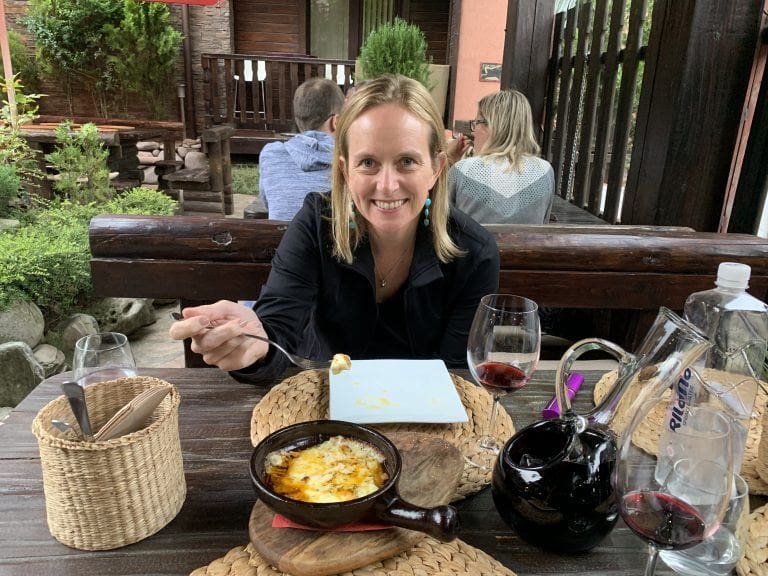
We eat out for lunch and dinner almost every day, all over the world. There are two things to watch for, and after that it’s simple.
The first is breading. Find out what they call it wherever you are, because “fried” sometimes means fried in a pan, which is fine, and sometimes means rolled in flour first, which isn’t. I once spent five minutes scraping batter off a chicken filet that showed up as a schnitzel.
The second is sauce. Assume there’s sugar in it, and in the US assume there’s a lot. Ask for it on the side, or ask for olive oil instead. That’s why we carry olive oil packets.
After that you just have to be direct about side dishes. We say no to the rice, the potatoes and the bread basket at nearly every meal, always nicely. That isn’t being fussy. Your side dishes are yours.
The rest of what we ask for, and what to do when a waiter decides you must mean gluten free, is in Eating Keto at Restaurants Anywhere in the World.
Travel days are the hard part
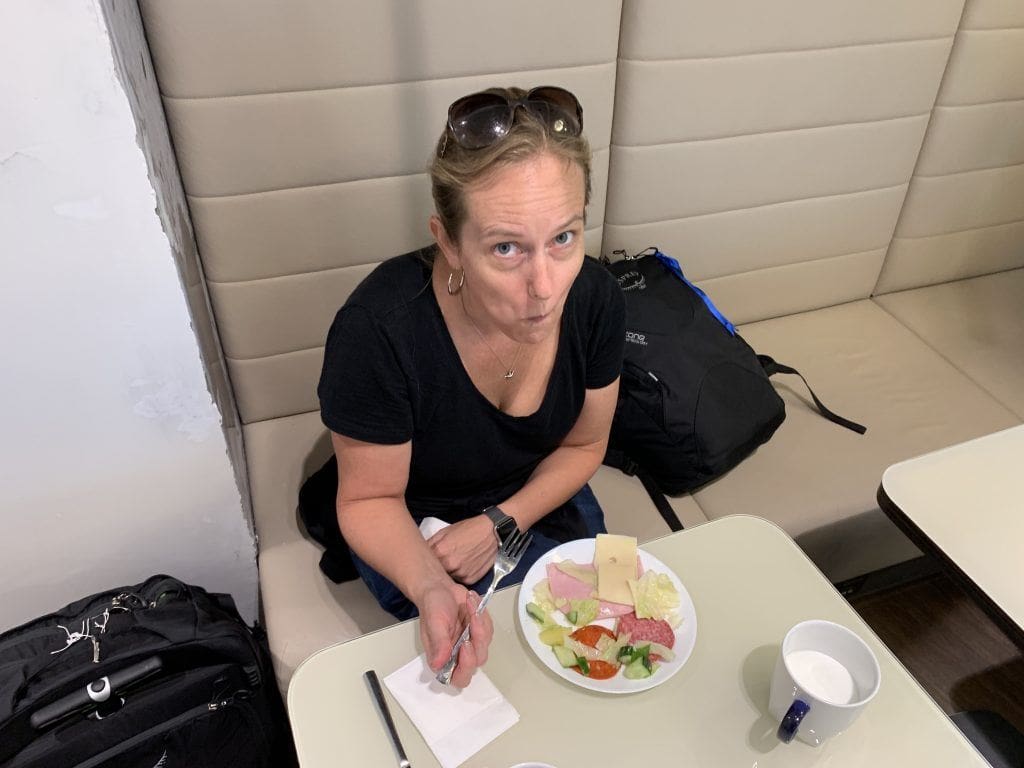
It’s the 5am airport, the four-hour layover, the long drive, the train platform at nine at night where your options are a vending machine and a kiosk.
Think about what gets sold as food you can eat standing up with one hand. Sandwiches, pastries, wraps, pizza slices, pretzels, chips. Almost all of it is the exact stuff we don’t eat, and buying an $11 sandwich to eat the little slice of meat and cheese in it is a terrible bargain.
So we stopped counting on finding anything and started carrying it.
If you get to hour nine of a travel day with an empty bag, you’re going to eat whatever is in front of you, and you should, because being hungry and stuck is worse. Carrying your own food means you never get there.
What’s in our bags
The full list with links is here: High Protein Travel Snacks. Sorted into sweet, savory and the staples. Here’s the short version of why each group made it.
Protein chips and crackers. Wilde makes chips out of chicken. That sounds strange until you eat them, and a bag has about as much protein as a chicken breast. Quest’s spicy cheese crackers and Pure Protein’s popped crisps do the same job. They’re all dry, they’re not greasy and they don’t smell, which the person next to you will appreciate.
Jerky. Nothing else gives you that much protein for that little weight, and it stands up to heat, cold, and being sat on. One warning: meat can’t cross a lot of borders. Check the rules before you go, and eat it before you land. You don’t want to be sorting this out at the agriculture desk.
Nuts. The original travel protein and still one of the best. No wrapper trash, nothing melts, no fridge. We buy the big jar and split it into small bags before a trip, one per day bag.
Roasted edamame. This one is for when we want salty and crunchy.
The sweet ones. This is the dirty part of dirty keto. Protein pastries with twenty grams of protein and almost no sugar, frosted protein donuts, cinnamon protein bars. A keto purist would object. I’ve been nine hours into a travel day with four more to go, and I’ll take the donut.
What’s on the list that isn’t low carb
Not all of these are low carb. Most of them are high protein.
The protein pretzels, for example, do have real protein in them, but they’re still pretzels. The gummy candy is low sugar and low calorie, not low carb, and it’s on there because sometimes you want a bag of candy on a long drive. The Balanced Breaks trays come with dried fruit and chocolate.
Matt’s a little more strict about carbs than I am. These are on the list because it’s my travel snack list, not a keto list. Most of it is both. Some of it isn’t, and now you know which.
The bottom line
After eight years this doesn’t feel like a diet anymore. It’s just how we eat.
Travel days are still the part that takes some planning, and that’s a packing thing. Two bars, a bag of nuts and a bag of protein chips in an outside pocket, and you don’t have to make any decisions at the airport when you’re tired.
The whole snack list, in one place
Eighteen snacks, sorted into sweet, savory and the staples.
Each one says what it is, what’s in it, and why it’s in our bag.
See the High Protein Travel Snacks list
Everything else I recommend is on my picks page, sorted by what you’re shopping for.
Subscribe to my newsletter!
I send one email a week. Real stories, what worked, what didn’t, and the practical things I only figure out by doing them. Plus my free packing guide and international travel checklist when you sign up.